Last year, I was rejected from Oxford. No interview, just a flat-out rejection for Maths. In hindsight, that became one of the biggest turning points in my life and gave me something much more valuable than I expected: perspective.
You don’t always get what you want. Sometimes, you don’t even get what you might deserve. But something you can always gain, regardless of the outcome, is perspective.
I’m not a teacher or a careers advisor, I can’t tell you what to do. All I can offer is my experience with how things were in the hope that something in it might help you. Writing posts like these reminds me how far I’ve come in a year, not just academically, but how in I see myself and how I define success, and it’s nice to hear from my readers about their thoughts and experiences too.
From enjoying the challenge to dreading the exams
Applying to Oxford to study Maths wasn’t just a random decision. It had been something I’d imagined and desired for years as a lot of people do. I loved the idea of Oxford, and for the most part, enjoyed the challenge that came with preparing for the application process.
After spending the summer holidays between Year 12 and 13 working through MAT/STEP/TMUA1 resources, the joy that I had from the feeling of doing something ambitious started to fade. What had been an exciting challenge slowly turned into constant pressure. I stopped doing MAT questions because I wanted to and started doing them because I was afraid of not doing enough, not being good enough. And eventually as the exams got closer, I started dreading them even more, there was even a point where I didn’t want to sit the MAT at all.
Then in early December when I received the email that I had not been offered a place, of course it hurt. The pain of rejection wasn’t just because I didn’t get what I wanted, but also because I had tied so much of my identity and self-worth to that one singular outcome. I was mourning the loss of an imagined future that might’ve been completely different in reality.
Rejection sucks— more when you know how hard you’ve worked…
Being rejected sucks. But it hits differently when you’ve given everything. When you’ve spent months working through past papers, sacrificing weekends, staying up late or waking up early to do just one more question, it hurts to feel like none of that effort was enough, it feels unfair.
You might’ve grown up hearing that if you just work hard enough, harder than everyone else, you’ll get what you want. It’s a comforting thought at first, gives you a sense of control. But then reality hits, you pour everything you’ve got into a goal, and sometimes, it still isn’t enough.
And that’s something barely anyone talks about: you can work incredibly hard and still not get what you want because there are so many factors outside of your control.
It’s easy to believe that the world is like a neat function, that the effort your input always results in the outcome you want, but the world is uncertain and full of variables beyond our control. That doesn’t mean your effort was wasted, it just means your effort isn’t the only deciding factor, and it definitely doesn’t mean your worth is defined by one exam or one outcome. Maybe the outcome you didn’t get wasn’t the only (or even the best) path for you. If you feel like it was, then you can find a way to reattempt things. But the skills and realisation you build through trying do not disappear just because one outcome didn’t go your way.
Working hard doesn’t guarantee you’ll get what you want, but it does guarantee perspective.
Feelings are Not Facts
In the aftermath, I felt like a failure for not doing as well as I wanted to in my entrance exams or A-Levels and spent the following days wallowing in self-pity, convinced I was a disappointment and had let everyone down. Regardless of how much I had achieved, it never felt ‘enough’. The goalposts just keep moving and that feeling of ‘good enough’ was non-existent2.
But feelings are not facts.
It’s not the end of the world if you get rejected, even if it might feel like it at the time, but remember that feelings are not facts3. This doesn’t mean you should ignore them, it’s good to acknowledge that feelings are real, they exist, and to let them exist. As one of my teachers would say to me in sixth form: “Wanting to change a feeling doesn’t change the fact of feeling it”. You can know that you’re being irrational4. You can wish5 you didn’t feel so disappointed, or guilty, or frustrated, but emotions don’t disappear just because we tell ourselves they’re ‘unreasonable’. Sometimes, the harder you try to force a feeling away, the more it clings on, and that’s just part of being human.
Complain if you want to about how unfair life is and get that anger and frustration out of your system. But your situation isn’t going to get better until you become pragmatic and do something about it. And please for goodness’ sake don’t keep everything bottled up. Try not to numb your emotions in whatever not very helpful array of numbing one’s emotions exist these days.6
Unhealthy coping mechanisms are easier to access than healthy ones, so talk to someone you feel comfortable talking to, there are thousands of people who’ve faced rejection. They might not feel exactly what you’re feeling, but that doesn’t mean you’re not allowed to be annoyed. It’s easier said than done, it’s easier to logically convince yourself and others that you’re over something, but the desire that’s been build for years for studying at a particular institution or achieving something just doesn’t vanish overnight, and that’s okay. Time heals, being in the company of people who remind you of your true worth help you heal. Doing something you love, without being attached to the outcome of that thing heals.
You’re not other people
You’re not the programmer, the mathematician, the Oxbridge offer-holder, or the person you’re constantly comparing yourself to, because you don’t need to be.
I certainly didn’t believe this the first time I got told, but you don’t need to be other people in order to be amazing. You’re already amazing in your own unique, incomparable way. And the sooner you realise you can’t be “the best” at everything, the happier you’ll be. You’re not other people, you don’t have their history or their resources or life circumstances, so what’s the point of measuring you life’s worth with their outcomes?
The world won’t do that for you unfortunately. People will judge and compare you against others for lots of reasons, but don’t let that degrade your self-confidence. We’re often taught that success means chasing the next best thing, the highest grade, the best university, the highest paying job, etc. Worse, we internalise the belief that if we don’t achieve one specific thing, we’ll never achieve anything.
Sometimes, the hardest part isn’t rejection itself, it’s the feeling you’ve let yourself or the people who believed in you down. But once again, feelings are not facts. You don’t owe people perfection, or the need to justify every choice you made, or live up to some imaginary version of yourself that never struggles. Most of the time, people who care about you just want you to be okay, and if they only value you for your results or how productive your are, maybe that’s a sign that their expectations don’t deserve to dictate your self-worth.
You didn’t let anyone down, not even your younger self, by doing something ambitious. At the end of the day, you can only control very few things in life, and one of them is trust in yourself and your abilities. So aim to do the best you can with what you have and where you are, because that’s all you can really do.
Working Hard vs Breaking Yourself
I’m not saying you shouldn’t work hard for the things you want in life. In fact, it’s good to be ambitious and do things that challenge you.
However, there’s a difference between working hard and working too much that you end up breaking yourself7 in the process. In my experience, the former is is the result of what you truly want in life, and the latter is often what other people expect from you, which may or may not align with what you want.
I don’t regret applying to Oxford because preparing for the entrance exams for Oxford and other top universities8 genuinely improved my problem-solving skills. They stretched my thinking and allowed me to become a better mathematician even though the outcome wasn’t what I’d hoped for. What I did regret was letting that dream become the only outcome I allowed myself to feel pleased about, and letting certain outcomes like my grades become my be-all and end-all at that time.
Realistically, you’re not going to enjoy every step of the process. Exams9 aren’t fun, revision isn’t always joyful, but it’s important to ask yourself what exactly you’re signing up for. Think about it for a second, what’s the point of breaking yourself to go to a place where you’re going to break yourself again?10
‘Do As I Say, Not As I Do’
I won’t claim that I always practice what I preach. Not because I don’t believe it, but because it’s hard.
It’s one thing to know something in your head, and it’s another to truly understand it. That kind of understanding doesn’t always come from reading or hearing someone say the right words, it often comes from (if you haven’t already guessed it) perspective. And sometimes, gaining that perspective involves struggling, being rejected, breaking down a little and slowly learning how to build yourself back up.
I was told countless times that I needed to rest and slow down by my teachers and friends and did I listen to them? Kind of, I listened, but I didn’t really understand it until I was forced to, until I felt the consequences. I wouldn’t wish that on anyone because nothing matters more than your own health, mental or physical. No university, no exam, no grade is worth sacrificing your well-being for and trust me, you don’t want to wait until it breaks you to believe that. It’s just not worth it.
Even now I find it difficult to slow down and just breathe… But when I do, I try to remember the little things, like how much tension leaves the body by just relaxing11 the shoulders. So slow down, because life doesn’t end if you don’t end up doing the this thing, or whatever thing you’ve attached your emotions and desires to.
I haven’t lived nearly long enough to offer the kind of the wisdom and perspective that my teachers or older friends have, but what can I tell you is that every difficult experience that made feel something deeply emotional like pain, disappointment, confusion, anger, etc. ended up giving me perspective I didn’t have before. And if you’re reading this and maybe going through something similar, I hope that this post has reminded you that you’re not alone.
I wish you the best in whatever stage of life you’re at, be that sixth form, uni, gap year, job, or just figuring things out. And if things don’t go the way you’d hope, always ask yourself, “What’s the worst that could happen?” Chances are, it’s not as bad as your brain or feelings might be telling you.
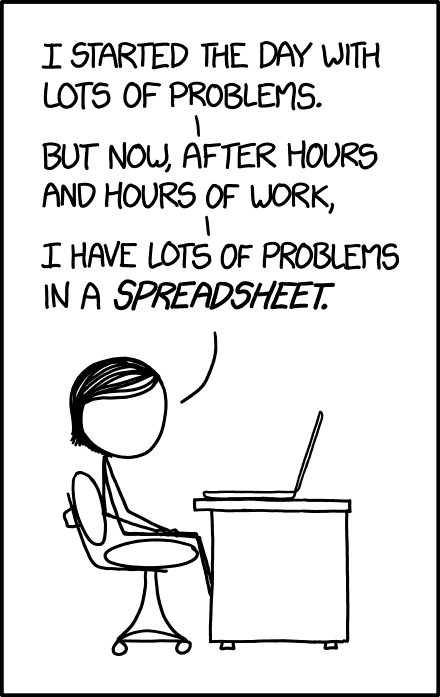
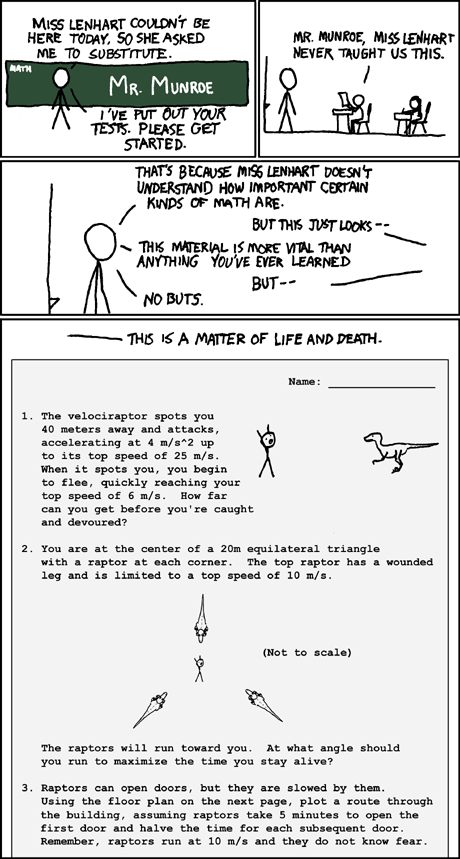
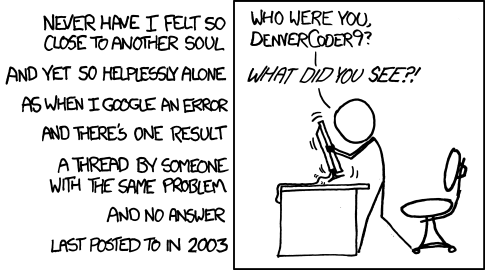
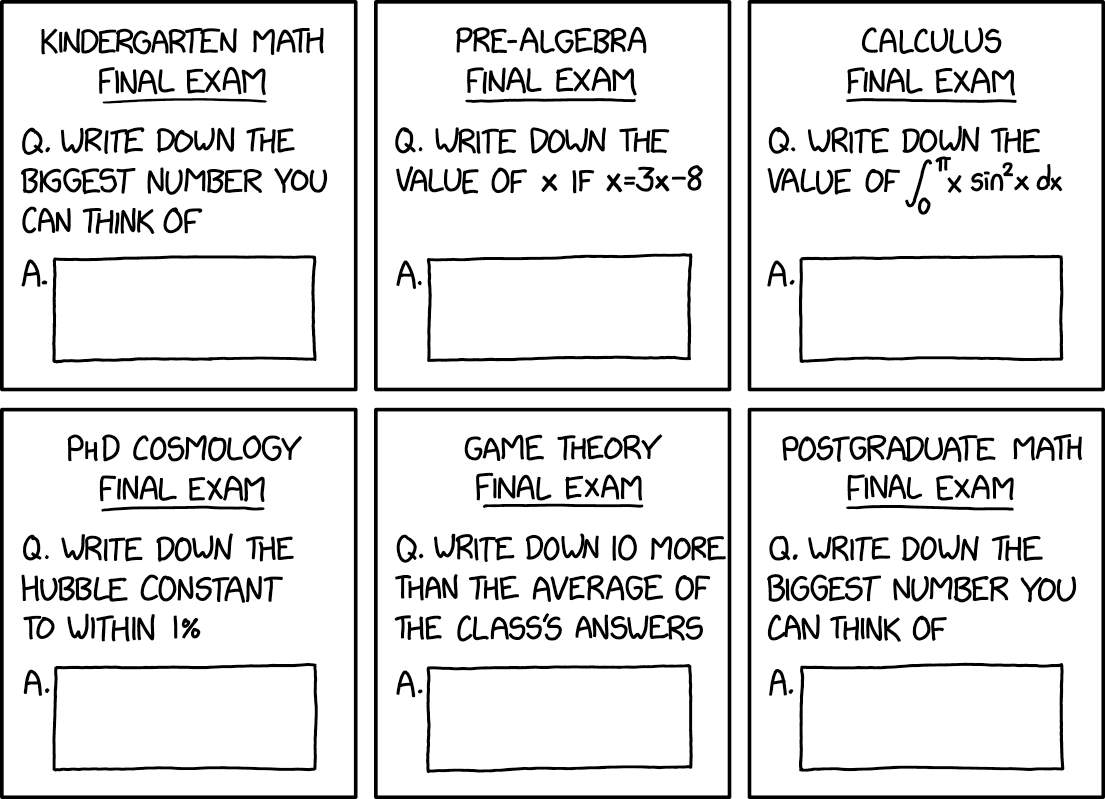
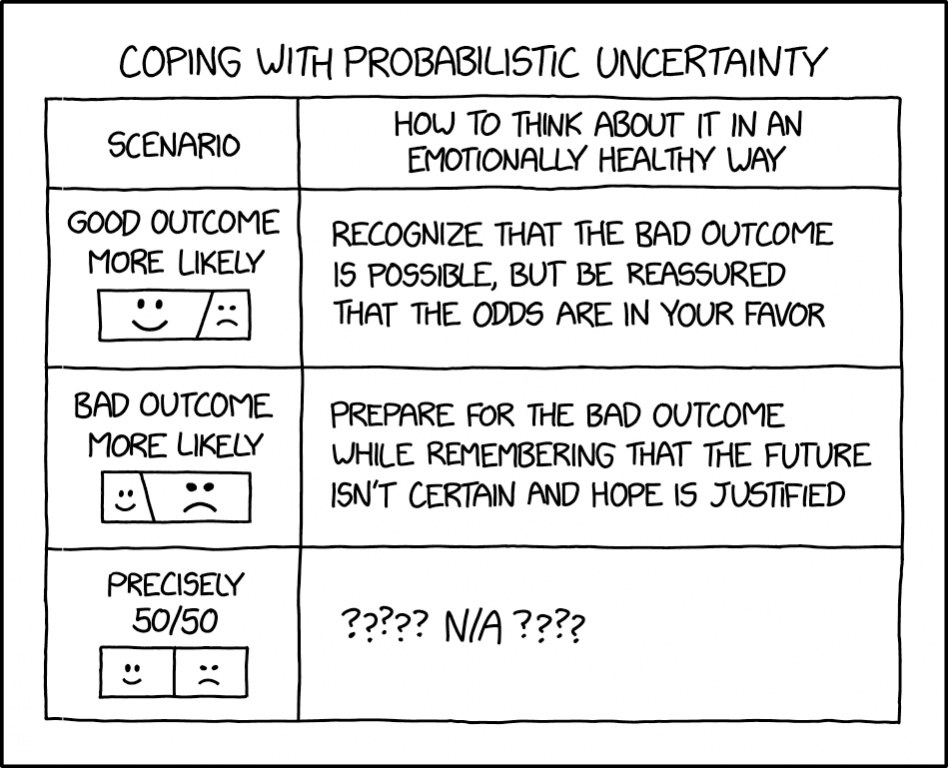
P.S – Bit of a longer (and personal) post this time, so if you’ve made to the end, congrats! Scroll down for some classic XKCD!
- MAT and STEP and TMUA are acronyms for maths-based entrance exams used by UK universities. ↩︎
- Something that did help me when revising for exams was writing down 3 good things, and 3 things to work on whenever I got a test back. It helped me recognise the progress I was making, as well the gaps in my learning. ↩︎
- And yes I will say this multiple times, because feelings are not facts, regardless of what your brain (which isn’t fully under your control either) tells you. ↩︎
- It’s tempting to think that “maybe if I could just think about this hard enough, I can find a way of framing it so that I stop feeling [insert emotion]”. It doesn’t work. ↩︎
- Sometimes, not wishing things were different than they are helps. Wishing things away doesn’t make them go away, it just adds another layer of suffering. The original Stoic quote is from Epictetus, but the same idea can found anywhere from Buddhist teachings to CBT. ↩︎
- I would usually be in the gym doing 2k free rate rowing ergs whenever I felt disappointed. Anyone who’s rowed before can tell you that the free rate 2k is one of the most brutal rows. Exercise is very good done if done in moderation. Going all out on the ergo every single time however… I wouldn’t recommend it ↩︎
- And how do you know which category you fall in? Good question. You eventually go through enough experiences to gain some perspective and/or have people around you who remind you to check in with yourself, please listen to these people. ↩︎
- It’s useful to look at things other than just league table rankings when applying to university, such as course content, teaching/assessment style and whether you like the actual place or not. League tables don’t tell the full story ↩︎
- For a post/rant on exams, look at Exams, Burnout, and Finding Balance ↩︎
- I didn’t actually learn my lesson by thinking about it… and I wouldn’t want anyone to learn it the hard way, so I hope reading this helps you catch yourself earlier than I did ↩︎
- One of my teachers once said about how they would focus on relaxing their collarbone before a piano performance, for some reason, that stuck with me. I didn’t even know collarbones could be relaxed, but here we are ↩︎
 Maths Rant